Showing posts with label Brighton Walsh. Show all posts

Monday, August 1, 2016

Self-editing Checklist


As hundreds of hopefuls are gearing up for #PitchWars this week, there has been lots of editing talk on the feed. How much is too much? How do you know when to stop? What’s the best use of your time (hint: it’s not #PimpMyBio)? What should you focus on first?

This year, I created a catch-all post on my blog that has many different topics listed—everything from crafting a synopsis, to getting rid of crutch words, to a cheerleading post encouraging you to keep on keepin’ on. But the posts I want to focus on are some of the self-editing tips I’ve included, and add a few more to the list.

While it’s true that mentors are not looking for perfection in the manuscripts that come our way, why not give your manuscript a leg up if you can? Here’s the real truth: I’m going to have my mentee do this homework anyway. So if it’s already done? Bonus points for you! That means that on a MS that maybe has more structural issues—deep edits that may take long enough to complete to make me nervous—but already has all this detail work done, I wouldn’t be hesitant to take it on with the short two-month revision period. Not like I may if it needed deep work and needed an editing overhaul. Make sense? You doing the work ahead of time means we have more opportunity to get into the thick of things and focus on Big Issues.

There are so many subjective reasons for mentors (and agents and editors) to say no. Why give them an objective reason to do so?

So how do you do this? I have a handy checklist I go through every time I finish a manuscript. The good news is the more you write and edit using said checklist, the more of a habit you’ll build, and these edits will start to come out while you’re writing instead of after the fact.

Only my mentees have gotten this checklist, but I’m going to share with you all because I like you and because you stopped by and checked out my blog post. And because you’re all submitting to me anyway. Right?

Read aloud
This is a great place to listen for awkward phrasing, clunky word choices or sentence structure, or unrealistic/stiff dialogue.

Spell check
Seems like a no brainer, but you wouldn’t believe how many people don’t do this.

Check chapter headings for consistency
Not just in numbers (1-20+, not skipping any), but in naming (Chapter 1, Chapter One, One, etc).

Find and cut your filter words
I have been preaching on this since I jumped on the feed this year. Upload your MS into wordle.net (you have to have Flash player installed, I believe, so if it’s not working, try that). Your biggest words are the ones you use the most. They’re probably back, just, then, really, quite, etc, and your MC names. Yes, even the names need to get slashed. You probably don’t need half of them.

Find and replace your distancing words
Doing this will give you stronger sentences which will in turn make your MS tighter. Felt, heard, saw, noticed, thought, realized, looked are all words that distance the reader from your MC. Find every sentence that has them and figure out a different, more powerful way to craft that sentence without it.

Adjective check
How many times do you classify your hero’s eyes with something pretty and poetic? His ocean eyes. His whiskey eyes. His rainforest eyes. How about your heroine’s hair? Her mahogany hair. Her long, flowy hair. You get my point. Mention it once, maybe twice, and then they’re just eyes/hair/skin/whatever. I know the descriptions are pretty. But they still need to go.

Adverb check
I’m putting this in here because some writers abuse this and use way too many. But I’m gonna let you in on a secret: I love them and I use them. That said, if you have fifteen on a page, you need to cull. Do a search for –ly and find them, then make sure you can’t replace it with a stronger verb.

Redundant actions
You don’t need to say she shrugged her shoulders or he nodded his head. She shrugged. He nodded.

Search and delete exclamation points
They’re overused and generally not even needed. Here’s a tip: Find and replace them all with a period. Then when you do a final read through, see what ones you need to add back in. There probably won’t be many.

Creepily moving body parts
His hands roamed over her body. Her eyes rolled. Anchor them to a person and reword for a stronger sentence.


There's your handy dandy self-editing checklist! Now that you have it, are you worried you don’t have enough time to get this done before the submission window closes? I don’t believe that, unless you’re a single parent working three jobs. (In which case, kudos to you. You’re amazing.) You have time. Use it to deliver the strongest MS you can.

Monday, July 11, 2016

Why Romance?

by Brighton Walsh

I get asked a lot why I write romance instead of one of the dozens of other genres out there. Why not fantasy or sci-fi or mysteries? (I get this especially from my oldest: “Can’t you write a non-kissing book?” No. No I cannot.) My simple answer is because I love love. I love reading about it and writing it. There is something magical and exhilarating about those first looks, first touches, first kisses. Imagine what it was like to fall in love for the first time. Now imagine getting to feel that over and over and over again without ever leaving the comfort of your couch. Romance leaves me breathless and happy. But that's not where it ends for me.

I read and write romances because I need to.

I don’t know if you’ve noticed, but the world is pretty damn scary, and it doesn’t appear to be getting better anytime soon. It seems like every time I log onto Twitter, I’m reminded of another tragedy that’s happened. It’s a dystopian novel right in my timeline. I see enough horror in every day life. I don’t need to have it in my books, too. Not when those books are supposed to be an escape for me. 

That’s the amazing thing with romance novels… You can have a thousand different stories—contemporary, historical, paranormal, suspense. You can be taken on twists and turns, you can have your heart ripped out in the middle of the book, but the one thing you can bank on? Those characters are getting a Happy Ever After.

If there’s no HEA, it’s no romance.

Having that comfort there, knowing that when all is said and done, my main characters are going to be happy and together, makes everything else okay. I don’t have to flip to the back of the book to make sure the heroine isn’t going to die or to make sure the couple doesn’t end up with two other people. You can go to any other genre and gamble with the endings if that’s your bag. Maybe you like having your heart ripped out and torn to shreds. I don’t, and that’s why I rarely—if ever—stray from this genre. And it might be a small thing in the grand scheme of things, but it's important to me to know I can provide an escape to someone else who's looking for it—or maybe who desperately needs it—with the books I write.


So while this 1.4 billion dollar industry—the highest earning and double what the next genre (crime/mystery) is at 728 million—gets looked down upon because it’s “silly” or “predictable,” I’ll be over here getting lost in a book that might make me cry along the way, but I know will give me the HEA I desperately need before it’s over. I'll end that book with a smile on my face and my heart happy. 

Wednesday, June 15, 2016

The Do's and Don'ts of Twittering During Pitch Wars


Pitch Wars is a nerve-racking time for many a writer. It’s hard to know what to do, what not to do, how often to do it, and what the general etiquette is surrounding conversation with the mentors. Twitter is an awesome place many of the mentors hang out. We’re there to answer questions, or just plain old chat with any/all hopefuls. That said, there are some definite do’s and don’ts when using the #PitchWars feed, so I thought I’d do a little post on using Twitter during the months leading up to, during, and post-Pitch Wars.

Do: Hop on and introduce yourself. The best way to start using the feed is just that: start using it. Everything can be found under #PitchWars, so jump into other conversations people are having, and don’t worry about interrupting. If they wanted the conversation to stay private, they’d have it via DM or email. This is a great way to make new friends, find CPs, and calm your nerves during the process.

Don’t: Jump into a conversation just to argue or stir the pot for your pleasure. Pot stirrers get side-eye.

Do: Ask questions of the mentors! It doesn’t even have to be a mentor in your category or genre, unless it’s specific to those things. The mentors who are on the hashtag are there because they’re willing to chat with you about your writing, your MS, something you’re unsure of, the industry, etc. And we're mentors because we've been around the block a time or two, so we have knowledge we're willing to share. Tap into it!

Don’t: Ask too specific of questions such as, “Are you interested in a time traveling troll who falls in love with a princess and then they have to fight the fairies for control of their land?” For many mentors, that crosses the boundary line they don’t want to cross. Instead ask, “Are you interested in fantasy?” or “Do you have an aversion to trolls?”

Do: Be positive and help fellow hopefuls! Don’t think of this as a Survivor type contest. Your positive energy and genuine concern of/help to fellow hopefuls will be noticed by the mentors. Alternately, your lack of positive energy/concern will also be noticed.

Don’t: Constantly bemoan the process, the mentors, Brenda, the industry, the agents listed, etc, etc, etc. Think of the mentors like your mom. We’re always watching, and we have eyes in the back of our heads.

Do: your homework! When the mentors are listed and the blog hop is upon us, don’t be afraid to chat with the mentors you’re considering. And it doesn’t have to be all shop talk! This is a great time to get to know the mentors you’re considering and see if you’d be a good fit, personality wise. Clicking with your mentor is a very important aspect, and, though I can only speak for myself, it’s also something this mentor takes into consideration when choosing a mentee.

Don’t: freak out if you never had conversations with your selected mentors and now fear you won’t get picked because of that. Mentors can tell your personality through many things; conversing on Twitter is only one.

Do: say thank you—to the mentors, and especially to Brenda and her assistants—and support those giving their time in whatever way you can. This is a lot of work, and work that isn’t always done without a price tag (both in terms of money and that all-valuable time). While a simple thank you is always appreciated and noticed, you can also help support the mentors giving their time by buying their books or checking them out from the library and spreading the word about them, and also by donating to help Brenda run Pitch Wars.

Don’t: whine about how much work you’re putting into getting your MS ready, wading through the 100+ mentor blog posts just to find the ones who accept your genre, etc. Believe me, we know how much work goes into it.

Do: keep following the mentors even if you didn’t get chosen. The urge to unfollow can be strong if you’re not selected, and I know it can be a little rough seeing someone else where you hoped to be, but the mentors are there and willing to chat with you even post-Pitch Wars if you should have questions on the process, the industry, etc. Don’t make a snap decision and do something that will only hurt you. Like my mom always said, “Don’t cut off your nose to spite your face.”

Twitter is an awesome and fun place to hang out before, during, and after Pitch Wars, so make the most of it! Swing by and say hi.


Tuesday, February 9, 2016

Mentor News, Events and Announcements


We're excited to share our successes with you! Check back often to see what we're up to.


February 5, 2016

YA Author & Mentor Reveals Cover…

of Her New Picture Book! 

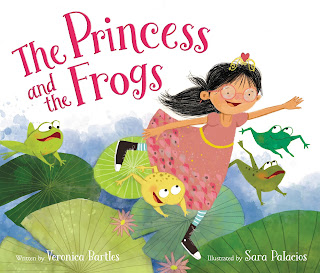
Veronica Bartles, author of the YA novel Twelve Steps, shared the adorable cover of her upcoming picture book, The Princess and the Frogs (coming 15 November 2016 from Balzer & Bray / Harper Collins)!

http://vbartles.com/princess.htm

 Tara Lazar, the creator of PiBoIdMo (Picture Book Idea Month) interviewed Veronica about making the transition between writing YA and picture books. You can read the full interview here.


January 19, 2016

Happy Book Birthday, Paige in Progress!

Grab your noise makers and party hats (and why don't you stop off and grab me a couple cupcakes, too...), and let's celebrate!

Paige in Progress, the third standalone in the Reluctant Hearts series, releases today. This book was such a labor of love, and love it I do. It's probably my favorite book I've ever written, with my favorite characters I've ever written about. I just love these two so... Readers are calling it laugh-out-loud funny, swoony, and uber sexy (so sexy that I probably shouldn't post an excerpt on this PG blog, so you're going to have to take my word for it).

Without further ado, here are the deets of this new release!

She wanted a one-night stand…and then he moved in next door. 
Paige Bennett is more than content with her life and what she does—and does not—have in it. She’s got a supportive family, a great apartment, and the best friend a girl could ask for; so what if her relationships expire faster than a carton of milk? After a disastrous detour courtesy of poor judgment in the boyfriend department, her plan is back on track and her dream job is finally within her grasp. Nothing can make her lose focus now. Well, nothing except the one-night stand she had with her best friend’s surrogate brother. The one-night stand she can’t stop thinking about.
Adam Reid has always been reliable…the responsible son, the loyal friend, the steady boyfriend. Two years ago, he graduated Magna Cum Laude and is well on his way to making a name for himself at an accounting firm in Denver—a far cry from working as a helper in the Mom and Pop store his parents own in Michigan. But when said store starts failing, he’s the only one who can step in and help. So reliable Adam does what he always does, and he comes to the rescue.
Paige thought Adam was a safe bet because he lives halfway across the country. But then suddenly he’s moving back to their town, and then into her apartment building, and soon he’s worming his way right into her life. If she’s not careful, he might sneak his way into her heart, too…

amazon_squarebarnes & noble_squareibooks_square koboamazon_ca_squareamazon_uk_square

January 5, 2016


HAPPY RELEASE DAY, BRENDA DRAKE!


It's finally here! The day so many of us have been waiting for. Thief of Lies, the supersonic YA debut from our beautiful friend and Pitch Wars mother, Brenda Drake, is out there in stores now, available to buy, read, love and review!

Yippee! Huge congrats go to Brenda. We are all so proud of her and her achievements, and this is truly the icing on one gigantic delicious cupcake, as well as the beginning of, no doubt, a long and fruitful career!


Wanna read an excerpt? Go here!
Wanna buy it? Go here! And maybe here!
Wanna review it on Goodreads? Go here!
Wanna find out more about Brenda? Go here!


Don't hesitate. Go out now (or if you're a lazy shopper, log on to your laptop) and buy this book. You will love it.

Congratulations once again from us, Brenda. Here's to you!


Monday, February 8, 2016

Plotters, Unite!

by: Brighton Walsh

In Authorlandia, writers usually fall within three groups: the plotter, the pantser, or the plotser. The biggest hurdle, I think, is figuring out which of these fits your writing groove best. I’m sorry to say that whatever I tell you in the next thousand words isn’t going to be the magic beans of the writing world. Unfortunately, the only way to figure out which will work for you is to try one or more and see what works best.

I’ve tried both plotting and pantsing a novel. I attempted to pants my first novel, and after a year I still hadn’t completed it. While that sucker was on hold, I got the plot bunny for Caged in Winter, extensively plotted it out, and 4 weeks later I had a complete manuscript. Magic? Unfortunately, no. I just realized that I work best under a script (and a massive deadline, but that’s fodder for another time), so I knew what needed to happen before I sat down to write. Otherwise, I found I had Stare-At-The-Blank-Doc-itis.

Even within each of those categories—plotter, pantser, plotser—there are a hundred different ways to do them. Again, finding what works best for you will be trial and error and the key to your writing success.

Once I figured out I was a plotter, I dove headfirst into that world and looked for any technique I could utilize. I’ve written nine novels, and I’ve tried a different method for nearly all of them. So far, I haven’t found one that works better for me than another, but that doesn’t stop me from searching.

The biggest thing I hear from pantsers is that they don’t like plotting because they don’t want to be tied into anything specific in case their characters start to go in a different direction. But I’ll let you in on a little secret: even if you plot out every single detail of your story, you can still listen to your characters and veer off the path when needed. Know why? It’s your book, and you can do what you want.

…

The Plotting Techniques

Beat Sheets
The first thing I do as a mentor is have my mentees fill out one of these. I have yet to get a manuscript that didn’t have some issues in the pacing department; I think it’s pretty common for many manuscripts. And since pacing can make or break your book, it’s important to pay attention to it. There are certain things that need to happen at certain points in the book—that’s true no matter the genre or category. Blake Snyder’s Save the Cat is a great resource, and I’m pretty sure you can apply it to any genre. The one I use for my mentees is Jami Gold’s beat sheet, as it’s specific to romance. In fact, she’s got a ton of different beat sheets—not just for romance—and you might find one that clicks for you. Even if you don’t plot this way, it’s a great resource to check after you’ve drafted to make sure your pacing is spot on.

The Snowflake Method
This method is a great, non-overwhelming way to plot. It takes you step-by-step, building on each item until it—yep, you guessed it—snowballs into the big picture. If you write in Scrivener, I’ve got an even bigger treat for you. Did you know there are all kinds of free templates online that you can use to build your novels? YES, SIR. And there’s a Snowflake Method template out there to get you started.

The Tentpole Method
I first saw this mentioned on Chuck Wendig’s blog, and I was immediately intrigued. Sometimes, sitting down to plot a novel can be overwhelming. It is a lot to tackle at once. Because of that, I really liked the idea of the Tentpole Method, because it allowed me to figure out the really big things that happen (based off the beats needed, per the beat sheets), and then I could fill in from there. Or not. Whatever works for you.

The Outline
This is exactly what it sounds like. It’ll take you back to fifth grade and those godawful reports you had to do, but it really works for some people. I’ve tried this method as well, and I did it in the following format:

A.     Chapter 1 – Brief descriptor (i.e. Meet Cute)
a.     Scene 1 – Brief descriptor
b.     Scene 2 – Brief descriptor
B.     Chapter 2 – Brief descriptor
a.     Scene 1 – Brief descriptor
b.     Scene 2 – Brief descriptor

And so on and so forth. This allows you to really get into every small detail of your book and figure out what’s going to happen and when.

Storyboard
Personally, I think this is best done with either a blank wall or a large posterboard and some colored post-it notes, but you can do it however floats your boat. The different colored post-its can represent anything you’d like—hero and heroine; Act I, II, or III; villain; tentpole moments; whatever strikes your fancy. The idea here is to write out all the parts that you know need to happen and move them around as needed once you get into the thick of things. I found this method really worked well when I was revising a novel. It’s daunting to look at a novel already completed and figure out where you need to fix things. This helped lay it out for me and made it clearer.

…

There are dozens upon dozens of other methods out there, and if you Google “plotting techniques”, or even ask around in your writer circles, you’ll no doubt find something else that works for them, and maybe for you too. One thing I want to stress is that no method has to be black or white. There’s no wrong way to plot, and if you want to mix five of these together and get your method, you can do that. If you want to start plotting, then get halfway into your story and toss your outline in the garbage, you can do that too. If you want to pants the first half of your book, then tentpole the remaining half? Yep, you guessed it. You are the boss and you can do what you want.

Because I’m always on the lookout for other techniques, do you have any that you’ve used and found success with? I’d love to hear about them in the comments!