Thursday, March 17, 2016

Writing Unique Stories

There are a lot of great books out there. There are also a lot of great unpublished manuscripts. The thing is, there is so much information on the web, in books, and in conferences that helps writers take their writing to the next level. But if everyone is improving their writing from okay to good, good to great, then what does that mean?

It means the agent slush pile is even more competitive than it was before. That’s not to discourage you. In fact, it’s the opposite. It’s to inspire you. Writing a great book is admirable and a glorious achievement. However, getting it snagged by an agent or editor is making your book go from great to exceptional. This in itself is an amazing creative challenge and one people should never be afraid of. It allows you to stretch your skills, learn how to tell your story in the best possible way, and to stamp your uniqueness over every page of your book. In short, it will make you better.

As you’re probably wondering, how does one go about making exceptional work that can raise its head over the sea of other great writing in the slush pile? I believe it is one simple thing. Yes, just one. But okay, the concept is simple but putting it into practice might be a little harder. So what is it?

BE UNIQUE


This is actually synonymous with be yourself. A lot of writers fall into a default when they write. They use not just story tropes, but technical writing defaults, too. What I’d recommend is to literally go through your manuscript from top to bottom and check off these points:

      Is the character someone you can really visualize in real life? How are they different from the 100s of other characters out there? Dig deep. No generalities, no watery allusions, no skimming.

      Same goes for setting.
    
      And world building.

      And dialogue.
    
      And…well, you get the jist.


And for good measure, to reference Alexandra Alessandri’s post, look at your sentences. Yup, right down to the nitty gritty. Does every single sentence have your unique stamp on it?
As they say, no one can tell your story like you do, so why use general techniques? Push yourself to create every single element in your story to be uniquely yours. It might be grueling work but the concept is simple: be yourself starting from word choice all the way up to big macro level stuff. You won’t regret it.

Sunday, March 13, 2016

Write MG right!


It's March, and at the mentor blog this means Middle Grade (MG) Month. And to build upon the lovely Jessica Vitalis' blog last week, I'm continuing a rough overview of MG.

I love to read YA and adult novels, oh and picture books too, and I love Enid Blyton ... so maybe I'm not ALL about MG, but I absolutely, hands down love it; I'd go as far as to say it's my favourite age group too. Probably because it was definitely during this time I think I became aware of my deep and passionate book love. When reading answered my questions; when library times at school weren't long enough; when having to put a book down to eat dinner was a trauma; when fighting sleep was essential just to get one last chapter in; when buying a new book with my pocket money competed with Christmas morning feels. And I think it's often during this time when children rely on books more than ever.  


There's an ocean of difference between YA, CB and MG. And I'm going to take a little bash at surfing those waves with two recommendations of, in my opinion of course, books that have hit that MG voice with one heck of a POW.


I'm absolutely sure you know, MG books appeal to a much much wider audience than simply 8-12 year olds, often including adults. Think Harry Potter. But this is where things start to get tricky. And we venture into two topics: Content and Voice. As an MG writer, you've a lot of responsibility to get these right. Don't lose your way; always remember your key audience: kids aged between 8 and 12. You get this wrong, or start trying to appeal to everyone, it just won't work. The innocence of MG books is what lures older readers in. There's little pressure, gentle complexity, and a naivety we all wish we still had.

Some book recommendations to read and study...

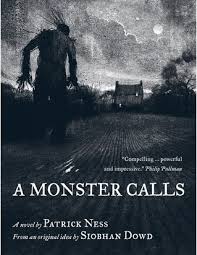
One of my ALL TIME favourite MG books is A Monster Calls by Patrick Ness. Genius. Classic. Perfect.
 
 
Now, I'm all about escapism when I write my own stories, which most kids of this age at some point need, but to complement this, mid-grade readers also want answers, or to understand the deeper elements of life. Well, there is no better book than this to show all aspiring (and accomplished) MG writers how it's done. I won't spoil the book, in case you want to read it – and you should right now – but it's basically the story of a young lad coming to terms with the pending death of his mum. Heartbreaking. But it's done so well, so subtly. It's not all about the boo-hoos. Good gracious no. The whole death side of things is touched upon and most importantly the details aren't exploited, and the tone is mature but still for the ears and mind of a child. We know Mum's ill, that's obvious, and we know she's suffering, but this is woven in so carefully, considerately, and every word so precious, that the young reader won't go away overwhelmed with what's involved with dying. Kids can only take in so much, remember. Truly, this book is perfect and an ideal MG example for writers to analyse.


Another perfect example of subtle, careful and respectful is There's a Boy in the Girls' Bathroom by Louis (Holes) Sachar. This is all about Bradley. And Bradley's behaviour pretty much lives up to what his peers – and teachers – have come to expect. But the narrative is so freaking clever that details of Bradley's behavioural concerns aren't delved into in ridiculous detail; language and information isn't loaded up and piled on the reader. We can see his struggles and we care, but the unnecessaries – only adults love to discuss – are spared. Kids still get the concept, the story, the character's journey, and they're introduced to the politics of school life and the influence parents can have on matters within school walls, but they aren't bogged down with technicalities. It's a superb book to study language, showing, and voice.  


And actually Holes is another book that's definitely worth a read.

If you want to know how the perfect MG can be achieved read these books, learn from them. Study them. The language, the style, the content. The voice. Find out what else is selling and work on understanding why and how. Read other MG books; as many as you can. Lap them up, absorb, scoff and munch (all technical writer words). And when you come to write your own MG story, enjoy yourself and, again, always remember who your key audience is. 

So respect these kids. They're smart, they're growing up, they're learning. So don't talk down to them, don't dictate, don't educate them, don't preach. You do that, and they won't listen. Don't try to speak what you think is 'kid' either, or what 'kid' was when you were that age; and don't treat them like babies. Respect them. This age is full of wonder. They're realising life isn't quite as rosy as they once thought; that grown-ups often get it wrong; that there's a whole lot of crazy stuff going on in the world that makes no sense to them. (It makes no sense to a lot of adults too, and it's perfectly OK for kids to know this.) But at the same time, you have to balance out treating them as mini adults with the fact that they are still kids, they do still need a hand to hold, and they're just not ready for all the graphic details. Yeah, it's not easy. You must tread with care.

Thursday, March 10, 2016

What’s In a Sentence?

This sentence is too long. This one’s too short. You have too many sentences starting in the same manner. It’s a fight scene, for crying out loud! Make it sound like one.

What’s in a sentence? That by any other…

Not all sentences are created equal, and not all sentences serve the same function. The basics are (for the most part) the same: you’ve got a subject, a verb, and a complete thought. But there are many ways of ordering the parts to create meaning and music, to craft words that sing to your reader. In addition to simple sentences, you can use a subordinatingconjunction (e.g. while, although, when, etc.), coordinatingconjunction (e.g. and, but, for, so, etc.) or conjunctive adverb (e.g. however, nevertheless, indeed, instead, etc.) to build complex sentences.

Capisce?

Before you run screaming for the hills with these grammar lessons, let me explain why paying attention to your sentences is important.

Your Sentences Contribute to Voice

Okay, so here’s a little grammar lesson: In simplest terms, syntax is the order in which words are placed in a sentence. The pattern of stressed and unstressed syllables creates rhythm, which in turn influences your characters’ style and your manuscript’s tone.

In other words: the way we order our words and sentences contributes to voice.


Notice the difference in the following examples:

Chase’s cell phone vibrates on his dresser. It sounds like a swarm of mosquitoes. THE OPPOSITE OF LOVE by Sarah Lynn Scheerger

The fruits and vegetables for sale were rejects from nearby supermarkets—basically, they were cheap and somewhat edible. THE THIEF OF LIES by Brenda Drake

Back then, the outskirts of Boston were still farmland, and in the summer I spent the long days out of doors with friends, coming home only when the sun set. THE GLASS SENTENCE by S.E. Grove

When I open my eyes, all I can see is darkness. Can’t move… can’t speak…can’t think through this jaw-grinding headache. RIDERS by Veronica Rossi

Each of the above has a different arrangement of words, each resulting in a different voice and tone. Sarah Lynn Scheeger’s example makes use of simple sentences. Brenda Drake’s has a compound subject and uses an em-dash to link a dependent clause. S.E. Grove’s is a longer, more complex sentence. And Veronica Rossi’s uses both dependent/independent clauses along with ellipses to simulate longer pauses.

And with each different style, we get a glimpse into the character’s voice and the story’s tone.

Often, our characters’ voices come to us with their unique quirks. They might have a habit of avoiding contractions, or maybe they skip the final “n” in some words. Perhaps they use slang. Or maybe English is their second language, and they skip some prepositions.  

As writers, we try to faithfully record the nuances of our characters, though it’s very easy to muddle the space between their voices and our own. While there is no one preferred order for words, other than it needs to make sense to the reader, it’s important to note that our entire manuscript will not be written using only one pattern or structure. The examples above? Just one of many these authors used.

Which leads me to…

Vary your sentences

Characters will speak a certain way (which contributes to their voice) and you will write a certain way (which contributes to your voice), but to achieve the perfect harmony, there has to be variety. I know what you’re thinking. But my protagonist always talks like this! Maybe…

While it’s important to be faithful to our characters, we need to remember we’re writing fiction. At the 2014 SCBWI FL Conference, Chris Crutcher said, “You don’t need to use the same words (curse, like, etc.) all the time. Just a couple mentions go a long way [to] place your reader there.” The same is true for sentence lengths. Just because a character tends to speak in short, simple sentences doesn’t mean she always should!

Consider the following:


Amazing what sentence variety can achieve, right?

When sentences follow the same structure too many times in a row (or when they repeat “like” every other line), we have monotony. And monotony is not good. It’s boring. A bored reader is one who might not finish the story. That’s the last thing we want!

The good news is that sentence length is an easy fix. As you re-read your sentence, make note when you have three or more sentences in a row that have the same structure. The key here is in a row. Ask yourself:
  • Do they start with the same subject? (e.g. He sat... He ran... He kicked...) If they do, change at least one.
  • Do they start with the same kind of dependent phrase? (e.g. Running to the door, he kicked the dirt. Shoving him hard, she dashed outside.)
  • Do they have the same syntax? (e.g. She didn’t know what was worse, losing or losing to him. She thought it was over, except there he was. She was wrong, as she always seemed to be.) 

A great source for identifying repetition and sentence variety, among other sentence/word choice errors, is ProWritingAid. 

Use sentence lengths to create (or reduce) tension

Aside from creating music, sentence lengths can create or reduce tension. How’s that, you ask? Consider a sword fight scene. If you’re in the middle of a fight, you’re not likely to recount it with long, flowery sentences. Your adrenaline’s pumping. You’re jabbing and ducking. Side-stepping. Another jab, two, three. And your opponent falls.

However, if you’re lying languidly against the hot sand, staring at the cotton candy clouds dotting the sky, you might be more in tune with nature, and as such, your words will take on a longer, dreamier quality.

Short lengths are abrupt. Harsh. Longer ones can be poetic. Use this knowledge to your advantage. Wield that mighty pen—er keyboard—to create sentences that grip your reader.  The combo of complex characters, compelling story and stakes, and flawless sentences will increase the chance of capturing an agent’s (and editor’s) attention!

Happy writing (& revising!)

Monday, March 7, 2016

The Birds and the Bees: How to Define Middle Grade Stories

Ask a room full of publishing professionals what makes a novel middle grade, and you’ll get as many different answers as there are people in the room. So how can an author determine whether their manuscript (or shiny new story idea) is suited for middle grade shelves? One might be tempted to examine the audience in an effort to answer this question, but readers of MG range from young advanced readers (think six and seven year olds) all the way up through adults. In order to get to the bottom of this dilemma, we need to turn to the material itself. Let’s start by examining some of the parameters commonly associated with middle grade books.

Some claim a novel can be defined as middle grade if the protagonist is roughly eight to twelve years old. This is a terrific jumping off point, but the reality of writing novels is seldom that straightforward and it doesn’t address the murky middle ground of thirteen and fourteen year olds, who often don’t fit neatly into MG or YA. In a blog post, author Diane K. Salerni reveals that the publisher of The Eighth Day asked her to lower her protagonist’s age from 14 to 13 to better suit the middle grade market. Another example of the problematic nature of relying strictly on age comes from Gary D. Schmidt’s Orbiting Jupiter. The twelve-year-old protagonist should, in theory, anchor the story firmly in middle grade territory. However, another main character is a fourteen-year-old eighth grader, who is already a father. In an author interview posted on the publisher's website, the book is labeled young adult.

Clearly, we need to look beyond age––we also need to consider subject matter and themes. For example, does including the birds and the bees automatically mean the story can’t be MG? Including explicitly sexual material is definitely a sign that the novel isn’t destined for middle grade shelves, but this is not to say that romance can’t appear in middle grade stories or that edgy material (or the lack thereof) defines MG novels. Books such as Nest, Bridge to Terabithia, Wish Girl, and Paper Cowboy all demonstrate that topics such as suicide, death, terminal illness and depression/mental illness are fair game.

Sometimes writers are tempted to look at point of view and language/writing style to help determine the audience for their novels. Many middle grade novels are written from a single point of view and contain relatively straightforward language. But by now it won’t surprise you to hear that this isn’t always the case. Wonder has six separate POVs. Echo is another great example of multiple POVs within one novel. And one must only compare The One and Only Ivan to The Thing About Jellyfish to see that it’s neither language nor writing style that defines middle grade novels. Nor can one point to factors such as external (versus internal) plots, genre, or word count. Although these are all important considerations, a few moments in a bookstore demonstrates that middle grade novels are every bit as complex and versatile as the audience that reads them.

If you’ve made it this far and still aren’t exactly sure whether your story is middle grade or not, let me leave you with this final bit of advice: the only way to truly understand the middle grade market is to read middle grade books. Although every story is different, if you read enough of them, you’ll develop an intuition that, together with a close examination of the elements discussed above, will help you determine exactly whether or not your story fits into the ambiguous yet beloved category known as middle grade.

Happy reading!

P.S. What are your favorite MG novels? Please share in the comments below!
P.P.S. Want more information on this topic? Here are a few links to check out:
            * http://kidlit.com/2010/11/20/is-it-mg-or-ya/

Thursday, March 3, 2016

Writing an opening scene is like juggling (only harder)


By Susan Gray Foster

New Clubs by jayniebell
Much has been said about opening chapters, opening pages, opening lines. And it’s no wonder. If the opening of a novel doesn’t entice the reader (whether that reader is an agent, an editor, or a member of the general public browsing through books at Barnes and Noble), they will likely read no further. This doesn’t necessarily mean that the opening needs to blow readers away with its awesomeness and leave them gasping, but it must catch readers' interest and compel them to spend hours of their lives reading the story that’s been introduced.

Although there are no hard and fast rules, generally speaking, opening chapters must introduce the reader to a main character they will care about, ground the reader in a setting, and establish conflict and tension, and the writer must do all this with an engaging voice, using a tone that is appropriate to the novel, without resorting to exposition, info dumps, or chunks of back-story.

It’s kind of like juggling: To open a novel, a writer must throw a lot of balls into the air at once and keep them there.

Openings that hook
Some writing advice suggests that openings must show the main character in their “normal world” before an inciting incident occurs. Others suggest that a novel should begin when something changes for the main character. The opening scenes of two of my favorite YA novels, ELEANOR AND PARK and ALL THE BRIGHT PLACES, do both of these things at once:

Rainbow Rowell’s ELEANOR AND PARK opens with Park’s normal life; he’s on a bus, heading for high school in 1980s middle-America. Within the opening paragraphs we learn that Park tries to “keep his head down” to avoid unwanted attention from the mean-spirited “popular” teens who sit at the back of the bus. Tension and conflict occur immediately as the popular kids pester him and make ignorant, demeaning comments about Park and his Korean mother, but Park is adept at navigating the high school cliques, and at tuning them out by listening to the era’s edgy new music on his headphones.

Then change happens: Eleanor gets on the bus. We empathize with Park as he desperately avoids offering a seat to the awkward, attracts-attention-in-all-the-wrong-ways new girl, and then does it anyway, setting the story in motion.

ALL THE BRIGHT PLACES, by Jennifer Niven, opens with the male protagonist, Theo, asking, “Is today a good day to die?” This opening line hits with an unexpected punch, and it hooks, compelling the reader to find out what sort of person would ask this question and why. In the next few sentences, we learn that Theo asks himself this question continually within the context of his day-to-day life as a high school student. And we discover that he is asking himself that question now, as he stands on the ledge of a tall building at his high school. We have a main character with a unique, engaging voice, we have a setting, and we have tension and conflict as Theo struggles with suicidal urges, all within a couple hundred words.

As Theo teeters on the ledge of the bell tower, we learn that his classmates refer to him as, “Theodore Freak,” and that they have become so desensitized to his strange, reckless behavior, they virtually ignore his precarious situation. This is Theo’s normal life. Information and back-story are woven seamlessly into a compelling scene taking place at present.

A few pages in, Theo discovers that he is not alone on the ledge of the tower. This will lead him to take action in a way that sets the story in motion. For Theo, something has changed.

Where to begin
When writing a first draft, trying to create a great opening scene with all the right elements, like the ones in these examples, would probably drive most writers insane and they would never get words down on paper. Everyone’s writing process is unique, but many find it works best to just start somewhere and write. Later, when the writer has a better handle on the important aspects of their novel, they can go back and rework the opening scene (usually, multiple times(!), with the help of good beta readers and critique partners.

… Or you can just throw everything in the air and try to juggle! ;)

For some other takes on openings, check out Where to Start Your Story, by #Pitch Wars mentor, Kes Trester, and How to Write a First Line that Hooks, by #Pitch Wars mentor, Stephanie Scott.

Thoughts on strong openings and how to write them? Please share in the comments below!